What Valaena’s Story Really Shows Parents About Confidence
 Stephen Quillens
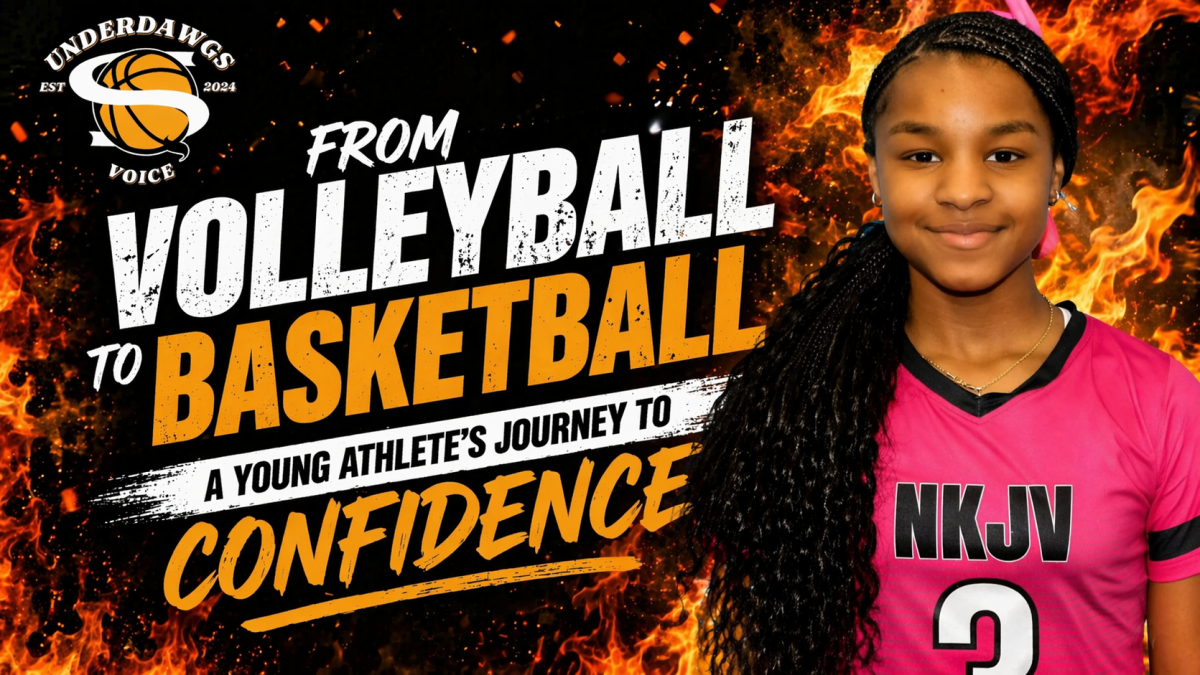
A young athlete’s move from volleyball to basketball shows parents how confidence is built through reps, adjustment, coachability, and trust in games.
What Valaena’s Story Really Shows Parents About Confidence
Sometimes confidence does not start with comfort. It starts with adjustment.
A lot of parents think confidence looks loud.
They think it shows up as swagger, instant belief, or a kid who always looks sure of themselves.
But that is not always how real confidence starts.
Sometimes it starts with a young athlete trying to figure out where they belong.
That is what stood out in Valaena’s story.
She did not begin with basketball as her main thing. She started in volleyball. Basketball was something she picked up to help her movement, her pivoting, and her overall game. But somewhere along the way, the game became more than cross-training. It became a real part of who she is as an athlete.
Now she is balancing basketball, volleyball, track, and golf. That alone tells you something important. This is not a kid scared of growth. This is a kid learning how to adjust, compete, and keep showing up in different environments.
And that matters for parents, because a lot of athlete development is not about picking the perfect sport early.
It is about watching how your child responds when they are stretched.
Confidence usually grows after the hard part
One of the biggest things in Valaena’s story is that her confidence did not just appear.
It grew.
That is the part parents need to catch.
She talked about doubting herself early on, on and off the court. That is real. A lot of young athletes go through that, especially when they are still growing into a new role, a new sport, or a higher level of competition.
But what changed was not magic.
It was work.
More reps.
More learning.
More experience.
More chances to prove to herself that she could do it.
That is how real confidence is built.
Not from somebody saying, “Just believe in yourself.”
Not from one good game.
Not from hype.
It comes from putting in enough work that, when the pressure shows up, the athlete has something real to stand on.
That is what I want parents to understand.
If your athlete looks unsure right now, that does not automatically mean they are weak.
It may just mean they are still in the building stage.
Her first big moment mattered, but not for the reason people think
Valaena mentioned scoring ten points in her first game, and that moment helped her realize she could really play.
That matters.
But the deeper lesson is not just about the points.
It is about what that moment did internally.
It gave her proof.
That is huge for young athletes.
Sometimes they do not need a speech.
Sometimes they need a moment.
A real one.
A game.
A play.
A possession.
A stretch where they feel, “Okay… I can do this.”
That is why development matters so much.
Because when athletes are still learning who they are, they borrow belief from real experiences. They start collecting evidence. And over time, that evidence becomes confidence.
Parents miss this when they only focus on outcomes.
They see points, wins, losses, stats.
But the real question is:
What is your athlete learning to trust about themselves?
Because confidence that lasts is built on proof, not pressure.
Volleyball was not separate from the story. It was part of the training
This is another reason Valaena’s story matters.
A lot of people think if a kid is not specializing early, they are falling behind.
I do not buy that.
Her volleyball background helped her. The reaction time, the angles, the footwork, the movement patterns, all of that carried over.
She was building athletic tools before she fully understood how those tools would show up.
That is how growth works sometimes.
Parents need to see that not every step has to look direct to still be valuable.
Sometimes one sport sharpens something another sport reveals.
Sometimes what looks like detour is actually development.
So if your athlete is still figuring out what fits, do not panic too fast.
Watch how they move.
Watch how they compete.
Watch what environments pull the best out of them.
Watch where they start gaining real confidence.
That will tell you more than forcing an identity too early.
Coachability is one of the clearest signs of future growth
One of the strongest things Valaena said was that you cannot get mad at your coach for trying to help you get better.
That right there is a big-time mindset marker.
Because coachability is not just about being polite.
It is about being able to stay open when correction comes.
That is hard for young athletes.
A lot of kids want results, but they do not always like the discomfort that comes with being pushed, corrected, or challenged.
But athletes who learn how to take coaching without shutting down usually keep growing. They do not waste all their energy protecting their feelings. They use it to improve.
That does not mean every coach is perfect.
It means teach your athlete to separate correction from attack.
That skill matters.
Because once athletes start seeing feedback as part of development instead of as a threat, they get better faster.
What parents should really notice
The most important part of Valaena’s story is not that she plays multiple sports.
It is not even that she found success early.
It is that her confidence started growing when her work caught up with her doubt.
That is the pattern.
A lot of athletes are not lacking talent.
They are lacking enough repeated proof to trust themselves under pressure.
That is why some kids look good in practice but hesitate in games.
That is why some kids seem skilled but still play unsure.
That is why some kids need more than encouragement.
They need structure.
They need reps.
They need environments that teach them how to recover, adjust, and trust what they have trained.
Confidence is not something you hand a young athlete.
It is something they build.
Parent takeaways
1. Do not confuse uncertainty with lack of potential.
Sometimes your athlete is not broken. They are just still building. Watch whether they keep working, adjusting, and responding. That tells you more than one emotional moment ever will.
2. Look for proof-building, not just pep talks.
If your athlete struggles with confidence, the answer is usually not more talking. It is better structure, more repeated success reps, and more chances to trust training under pressure.
If this sounds like your athlete, start here.
Pressure reveals training.
Categories: : Confidence, Pressure